Window Seat or Wall Seat: Choosing a Spot for a Small Room
Window seat or wall seat? Compare daylight, circulation and daily use to choose a small-room layout that suits the way you actually spend time there.
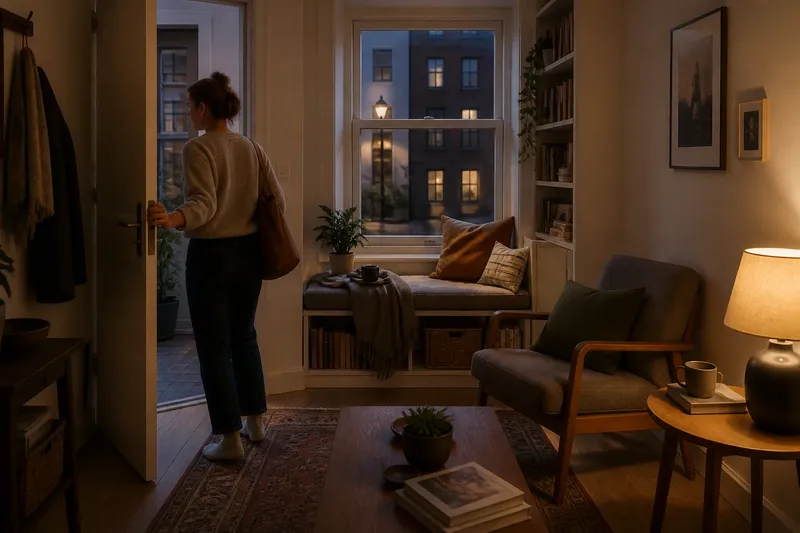
With a mug balanced on one knee, you turn sideways to let someone pass between the chair and the door. That small negotiation is a useful clue when choosing a window seat or wall seat in a small room: the better position is the one that gives the room a job without making every other job awkward.
What should a seat do in this room?
Before deciding where a seat belongs, name its ordinary purpose. Is it for reading, putting on shoes, waiting for a kettle, talking with a visitor, or sitting beside a view? One seat can serve several purposes, but a layout that suits a quiet reading corner may be irritating in a room used as a route between the entrance and kitchen.
Watch the room during a normal day rather than judging it from the doorway. Notice which path people take, where bags collect, where daylight falls, and which surfaces are already doing useful work. A seat should fit around those habits, not ask the household to perform a new choreography for its benefit.
Also consider the seat itself. A deep bench can occupy more visual and physical space than a narrow chair, while a built-in ledge may leave the floor clearer but offer less flexibility. Cushions, a small side table and a lamp all need somewhere to go; the seat is rarely the only object involved.
When does a window seat fit?
A window position makes sense when daylight, a view or a connection to the street is part of the seat’s purpose. It can suit a reader who likes natural light, someone who wants a perch near a plant shelf, or a room where the window is the most pleasant place to pause. In a narrow room, a seat placed beneath a window may also use a strip of space that would otherwise remain difficult to furnish.
Check what the window demands first. Curtains or blinds need room to move, and the sill may make a conventional chair sit awkwardly. A radiator, draught, glare on a screen or a view directly into a neighbour’s window can change the appeal. The window seat is not automatically the brighter or more comfortable choice at every hour.
It is a weaker fit if reaching the window means crossing the main route, blocking a door or squeezing past the seat to open a cupboard. Keep the approach to handles and opening panels clear. A perch that makes ventilation or curtain use inconvenient may become decorative furniture with an occasional occupant.
When does a wall seat fit?
A wall seat suits a room where a clear route matters more than a view from the chair. Placed against a quieter wall, it can leave the centre open and keep the window accessible for plants, a desk or simply opening the sash. This often works well in a room that doubles as a passage or needs to change use through the day.
Look for a wall that does not compete with a door swing, a radiator or a frequently used cupboard. A low-backed bench can feel less imposing than a tall armchair, while a chair that can be moved aside may be preferable if the room’s use changes. The trade-off is that a solid wall may offer little daylight, so reading or detailed work could call for a lamp.
Think about what sits behind the seat, too. A wall is useful for a narrow shelf or a reading light, but adding both can crowd a tight corner. Keep the arrangement simple enough that the seat remains easy to approach and leave.
Which position fits your daily pattern?
What if the window is the room’s best feature?
Choose the window position if the view or daylight is a reason to sit there, and the route to the window remains clear. If the window is mainly needed for ventilation, preserve access rather than placing a bulky seat in front of it.
What if people cross the room constantly?
A wall seat is usually the more considerate starting point when the window side lies along the main route. Set it beyond door swings and keep a direct path through the room, rather than asking passers-by to weave around knees.
What if the room has several uses?
Choose the position that interferes least with the room’s busiest use, then make the seat useful for a secondary one. A movable chair may suit a room that alternates between work, meals and conversation better than a fixed bench.
What if neither spot feels comfortable?
Try a smaller or less deep seat before choosing between the two locations. If both positions interrupt a route or block something you use, the room may need a different kind of perch, such as a folding seat or a chair brought in only when needed.
How can you compare the options before committing?
Use the actual room, not an imagined furniture plan. Mark the proposed footprint with masking tape, then walk the route from the door to the window and to anything used often. Sit in a chair of roughly similar size if one is available; a cardboard outline can show the width of a bench, though it cannot tell you how comfortable it will be.
Say you rent a compact living room where the window faces a lively street and the door opens towards it. Imagine placing a narrow bench under the window and a chair against the opposite wall. If the taped bench outline leaves the door’s path clear but makes the window handles awkward to reach, the wall chair is the more practical choice; if the wall chair crowds the route to the kitchen, a slimmer window perch may fit better. The visible result is not a universal answer, but a clearer sense of which inconvenience you would rather avoid.
When assessing both positions, check:
- Route: Can someone pass without turning sideways or stepping around the seat?
- Access: Can you open the window, reach curtains and use nearby cupboards?
- Light: Is daylight useful for the seat’s main task, or is a lamp more reliable?
- Comfort: Does the seat depth suit the way you intend to sit?
- Extras: Is there room for a lamp, a book or a cup without cluttering the route?
- Flexibility: Would a movable chair serve the room better than a fixed bench?
For fittings, built-in work or any change that affects a window or its coverings, follow the manufacturer’s instructions and any relevant local requirements; consult a qualified professional where the work calls for it.
What is the better choice for a small room?
Choose the window seat when the light or view gives the seat a clear purpose and access remains easy. Choose the wall seat when circulation, flexible use or an unobstructed window matters more. If both arrangements have a drawback, favour the one that leaves the room’s most-used route and task undisturbed.
For a window seat or wall seat, the decisive detail is often not the prettiest view but the path a person takes with a mug, a bag or a laundry basket in hand. Leave that path comfortable, and the seat has a better chance of becoming part of the room rather than its latest obstacle.