A Neighbourhood Afternoon with One Destination and Room to Wander
Plan a neighbourhood afternoon around one destination, with a simple route and enough open time to notice nearby streets without rushing.
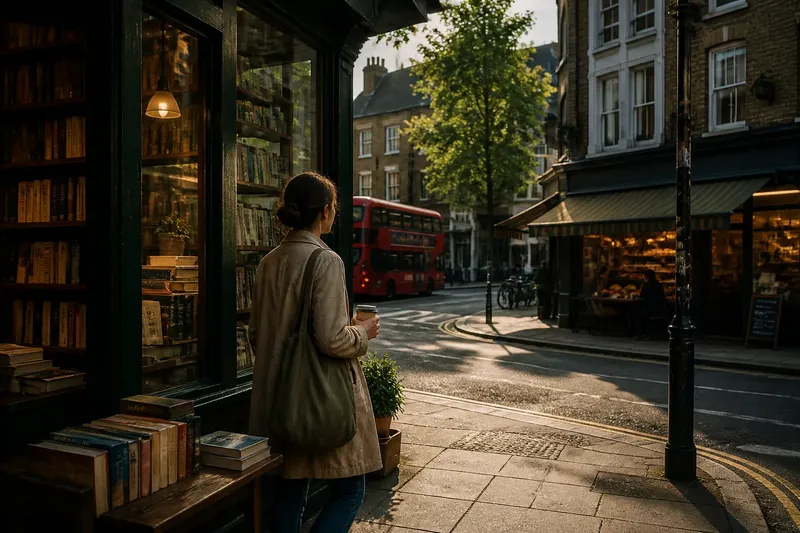
You step off the bus beside a small bookshop, intending to browse, and notice a bakery across the road that was not on your list. A neighbourhood afternoon works best when the bookshop is the destination, not the start of a tightly packed itinerary. Choose one place worth reaching, then leave the surrounding streets some room to make their own suggestions.
This kind of city break is not an attempt to see a whole district. It is a way to spend a few unhurried hours in one part of a city, with a clear reason to go there and no obligation to turn every turn into an attraction. The destination supplies a centre of gravity; the open time keeps the afternoon from becoming an appointment with pavements.
What counts as one destination for a neighbourhood afternoon?
Choose a place that can hold your attention for a while and gives you a reason to visit that particular neighbourhood. It might be a public garden, a museum, a market hall, a cinema, a specialist shop, a gallery or a café you have been meaning to try. The destination need not be grand. It only needs to be definite enough that you can set off without debating the whole day again.
A useful choice has a natural relationship to the area around it. A market hall may lead you past older shopfronts and side streets; a garden may sit near a canal path or a row of independent cafés. You are not choosing these as extra tasks. They are possibilities within reach if they appeal once you are there.
Decide what you want from the destination before leaving. Perhaps you want to see a particular exhibition, sit outside with a drink, or browse without buying anything. One simple intention helps you notice when you have had enough. It also prevents the awkward feeling that you must extract the full value from a place simply because you travelled to it.
How do you choose a neighbourhood without overplanning?
Start with a place you can reach comfortably from where you are staying or spending the day. A direct bus, a familiar Underground line or a straightforward walk is often more useful than a complicated route that looks efficient on a map. Check the destination’s opening arrangements and the way home, then resist the urge to research every nearby recommendation.
Look at a street map for the broad shape of the area, not for a complete route. Note the destination, a sensible arrival point and one or two streets that would be pleasant to pass through. Leave the rest undecided. Maps are good at showing where streets go; they are less good at telling you whether a particular pavement will feel inviting once a delivery van has occupied half of it.
Consider the character of the destination as well as its name. A busy market may be lively but tiring; a small gallery may be quiet enough to leave energy for a wander afterwards. If you are travelling with someone, agree on the main stop and the general pace, rather than trying to anticipate every preference. A shared starting point is usually enough to keep the afternoon sociable.
How much should you plan before setting off?
Plan the practical edges and leave the middle open. Know how to reach the destination, when it closes, whether you need to reserve entry and how you might return. Then keep the rest of the afternoon as a loose span rather than assigning a task to each part of it.
Think of the plan as a coat hook: it gives the afternoon somewhere to hang, but it does not dictate what every moment must carry. A single destination is the hook. Nearby streets, a brief stop for something to eat or an unexpected view can be the things that gather around it, without needing to be fixed in advance.
It can help to choose a natural point at which you will decide what comes next. This might be when you leave the destination or reach a square nearby. At that point, ask whether you want to walk, sit, eat or head back. You need not make that decision before you have seen how the place feels.
Say you choose a neighbourhood cinema for an afternoon screening. You check the showing time and the nearest bus stop, then leave the surrounding hour unscheduled. Afterwards, you walk along a side street, pause at a small greengrocer to look at its window display, and decide to sit in a nearby café before returning. The observable result is a complete outing with a few local details in it, rather than a chain of timed visits.
What should you do when you arrive?
Give the destination your attention first, unless there is a practical reason to do otherwise. A market hall is easier to enjoy before you are hungry and impatient; a garden may be more restful before the pavements have taken their turn. Spend as long as the place holds your interest, then leave when your original reason for visiting has been satisfied.
When you come back outside, take a moment to get your bearings. Notice the direction of the main road, the nearest public transport and the streets that feel comfortable to explore. You might recognise a church tower, a park entrance or a distinctive corner shop. A few landmarks are enough; there is no need to convert your surroundings into a memory test.
For the wander, follow curiosity at a human pace. Turn down a street because it looks pleasant, pause at a bookshop window or take the long way around a square. If a route becomes noisy, crowded or inconvenient, choose another. There is no prize for persisting with a street because it appeared in a guide or on your map.
Keep the difference between looking and intruding in mind. Shop windows, public buildings and open streets are part of ordinary city life; private courtyards, residents’ entrances and marked restricted areas are not invitations to explore. A gentle afternoon does not require treating every doorway as a discovery.
What if the neighbourhood is busy, quiet or unfamiliar?
Let the conditions alter the scale of the wander. On a busy day, stay on a broader street, choose a quieter parallel road or take a seat somewhere open to the public. If the area is unusually quiet, keep to well-used streets and places where you feel at ease. The point is to enjoy the district, not to prove that you can make every setting work.
In an unfamiliar neighbourhood, use public transport signs, a map app or a printed map to keep your bearings. Save the destination and a nearby stop if that makes it easier to relax. You can still wander without switching off your judgement: check crossings before stepping into the road, mind cycle lanes, and avoid letting a phone distract you where the pavement is crowded.
If the weather turns, choose a modest indoor pause rather than racing through a list of alternatives. A library, covered arcade, café or public museum may offer shelter, depending on what is nearby and open. If nothing suits, the afternoon can simply end earlier. Changing the plan is not a failure of planning; it is the useful part of having kept the plan light.
Where can you stop without turning the break into another errand?
Look for a place that lets you pause without requiring a second itinerary: a public bench, a café table, a park edge or a covered passage where lingering is welcome. Sit long enough to notice the pace around you. People crossing with shopping, a bus pulling away, or a shopkeeper arranging a display can make the neighbourhood feel more legible than another hurried turn along the map.
Food can be part of the afternoon, but it need not become a hunt for the district’s most talked-about dish. Choose somewhere convenient that suits your mood and budget, or bring a simple snack if that fits your plans. If a queue makes the stop feel like a task, move on. The meal is there to support the outing, not to become its second destination by default.
When you find a pleasant spot, resist the impulse to document every detail for later. A quick note of a street name or a shop worth revisiting may be useful; a full record can wait. An afternoon spent looking at a place is allowed to leave fewer receipts than a visit spent proving that it happened.
What do people often ask before planning a neighbourhood afternoon?
How many places should I include?
Choose one main destination and treat any other stop as optional. A nearby café or park can fit naturally, but adding several planned visits tends to turn the outing into a route to complete.
Is this a good plan for a solo city break?
Yes, if you choose a destination and streets where you feel comfortable, and keep a straightforward way back in mind. A solo wander can be quiet without being aimless: the chosen place gives the afternoon a starting point.
What if I get bored after the main destination?
Look for a public place to sit, take a different street back or end the outing. You are not obliged to manufacture interest, and heading home while you still feel content is a perfectly sound finish.
Should I use a map while wandering?
Use one when you need it, then put it away when you do not. Checking your position at a junction or before leaving for home can preserve a sense of direction without making every turn a digital instruction.
How do you know when the afternoon is finished?
It is finished when the destination has done what you came for and the neighbourhood has had enough of your attention for the day. That may mean sitting for a while, taking a route back through a street you liked or boarding a bus without adding one more stop. Leave while the outing still feels coherent, rather than waiting until tiredness makes every pavement look personally unhelpful.
For a neighbourhood afternoon, the main search is not for the fullest possible itinerary but for one place that makes going out worthwhile. Pick that place, learn the practical details and leave the rest open enough for the district to surprise you in small, ordinary ways. On the return journey, you may remember a particular shopfront or turn more clearly than a list of attractions, which is a perfectly respectable account of a city break.